
Innovation for all of us
Building a Web we can trust
Putting people and organizations in control of their digital lives supports the restoration of the Web to its original promise and opens up new possibilities for connecting humanity
An Ecosystem for Trusted Data Sharing
Emerging cryptographic web technologies enable secure identity and data verification
between parties, providing a more streamlined and privacy preserving Web. Digital Bazaar’s technology
ecosystem represents over a decade of software development, inventing and vetting technologies, and
spearheading Web Standards at the World Wide Web Consortium.

Decentralized Identity
Secure Data Management

Integrations
Proudly working with
Lorem ipsum began as scrambled, nonsensical Latin derived from Cicero's 1st-century BC text De Finibus Bonorum et Malorum.











Ask us about your use case!
Tuned to your needs
Our decentralized identity and verifiable data solutions are applicable to almost every sector of our economy. Wherever identity or data needs strong authentication across organizational or departmental boundaries, our technology platform is likely to be useful. The examples shown are just some of the use cases and market verticals that our technology can address. Ask us about your use case.
Build on a solid foundation
The Veres Platform
The Veres platform consists of decentralized identity and data management components that can be combined to build highly performant distributed applications.
Veres Issuer
Veres Issuer enables organizations to issue any type of digital credential to customers, employees, or other organizations. Advanced cryptography ensures tamper detection.
Veres Wallet
With Veres Wallet, customers and employees can securely and privately store their digital credentials. Use Veres Wallet to receive credentials from Issuers and present credentials to Verifiers.
Veres Verifier
Organizations utilize the Veres Verifier to evaluate the authenticity of digital credentials. Veres Verifier uses advanced cryptography to ensure that digital credentials can not be easily tampered with or forged.
Veres Vault
Veres encrypted data vault is a place to securely store and share your sensitive information such as legal or supply chain documents. It also stores application data, enabling a new generation of user-centric apps.
Veres Delta
Veres Delta enables organizations to launch fit-for-purpose distributed ledgers. A flexible JSON-based data model empowers developers to quickly tune their ledger to specific use cases without being constrained by a legacy data model.
Veres DID
Veres DID (Decentralized Identifier) is a FIPS compliant distributed ledger that can be leveraged to build performant DID methods for governments and private sector consortiums. Veres DID provides the technical infrastructure to match your trust and governance model.
Case Studies
Our Technology Implementations
In 2014 Digital Bazaar initiated foundational Web Standards that support the decentralized identity ecosystem. We’ve since proven the technology via multiple Proof of Concepts involving fortune 500 companies and multiple national governments and are now deploying large scale production solutions into the market.

Solving privacy-preserving age verification for 150,000+ convenience stores
With a reach of 200 Million end-customers, our solution verifies a customer’s age with a high degree of accuracy
Learn More
Veres One: A Globally Interoperable Distributed Ledger for Decentralized Identifiers
Digital Bazaar engineered the Veres One distributed ledger for the Veres One Foundation.
Learn More
Digital Permanent Resident Cards and Enterprise Credential Lifecycle Management
This Proof of Concept demonstrated the ability for US Citizen and Immigration Services to issue permanent resident cards
Learn More
Supply Chain Tracking and Verification of Intellectual Property Rights
The Intellectual Property Rights Blockchain Proof of Concepts sought to enhance the process of registering and verifying intellectual property assertions
Learn MoreWe work with you to deploy production systems
Customer Engagement
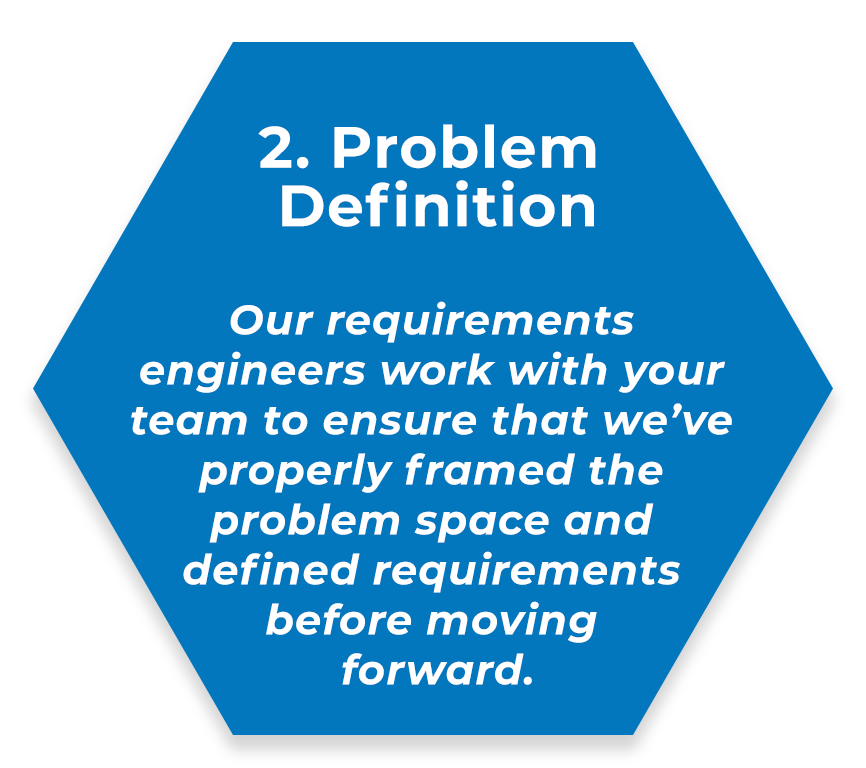
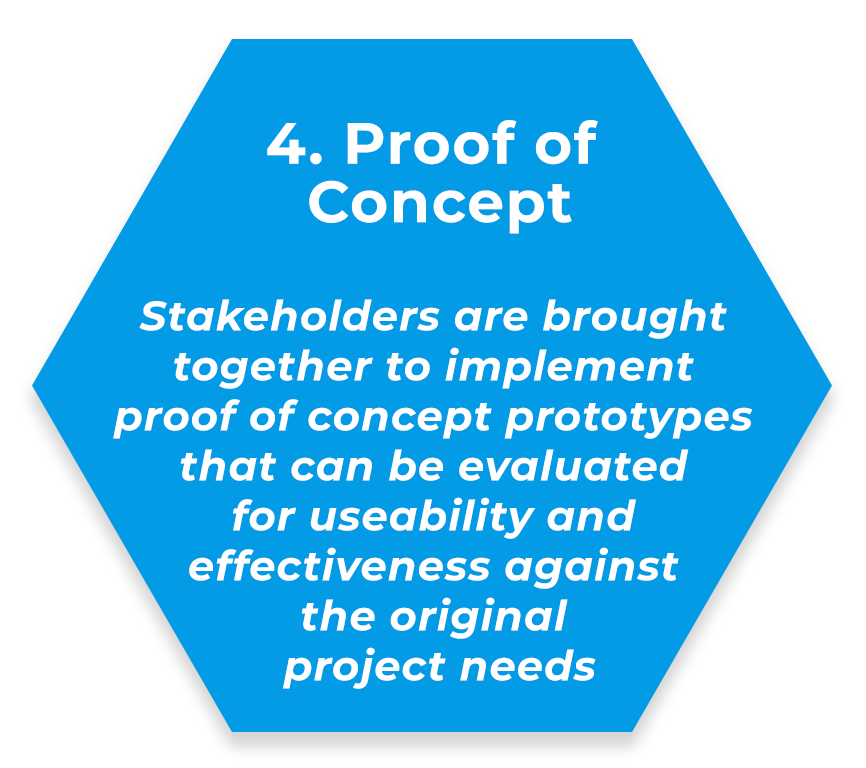
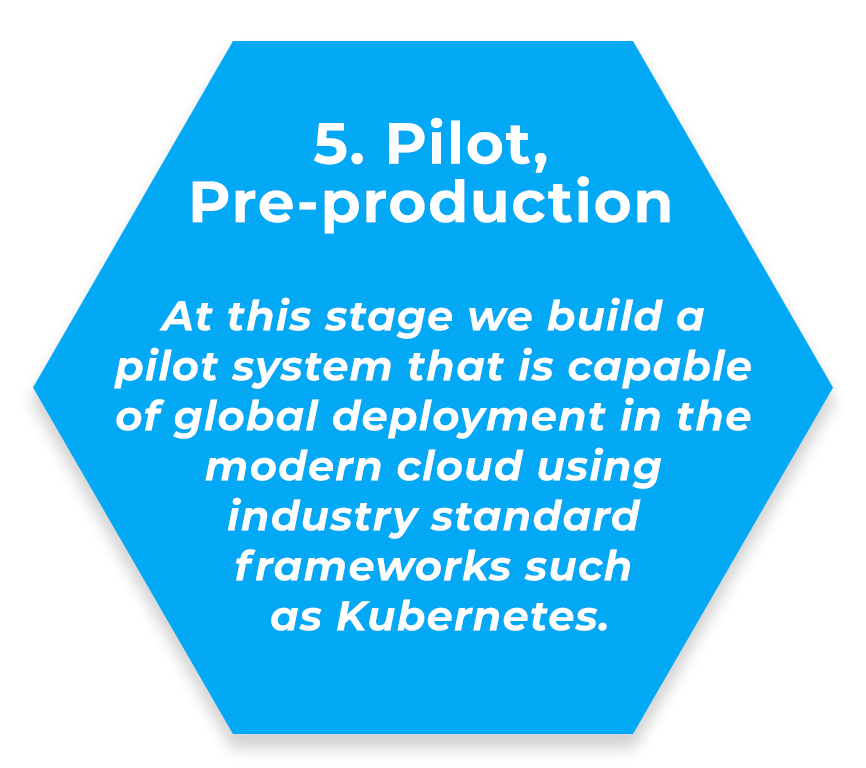
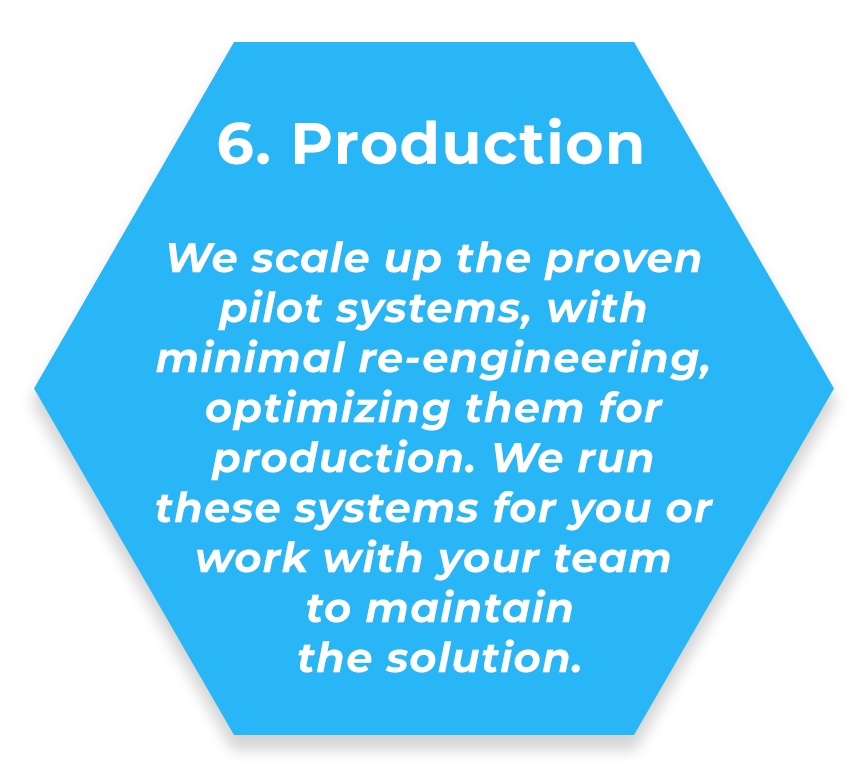
Process
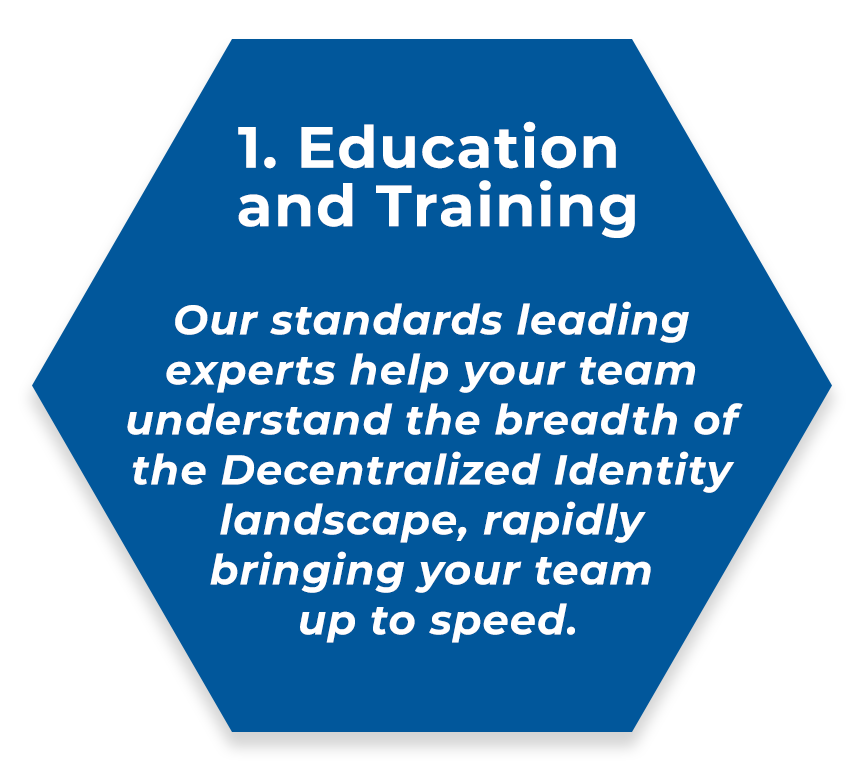
Decentralized secure interoperable identity is a growing need. We have been part of the standards work to support this need for over a decade. Our experience has taught us that successfully deployed solutions require a multistep process that starts with a core understanding of how these systems work and how they can be applied to a customer’s marketplace. At this point off-the-shelf products are difficult to achieve, so each new opportunity needs a focused bespoke solution that is tailored to the real problem at hand. Our decade of work in this area has taught us that successful projects follow the sequence shown. We partner with you on each step.

Web Standards Pioneers
For over a decade Digital Bazaar has played a central role in standardizing an array of
technologies that enable verifiable information to be exchanged over the Web.

An Identity Layer for the Web
The Web has long-needed a globally interoperable way for people and organizations to prove who they are in order to purchase a product, property, get access to a digital space, or open an online account. Proprietary digital identity providers attempted to meet this need but they simply didn’t scale. Along with dozens of other organizations, Digital Bazaar is helping standardize technologies to enable a globally scalable digital identity ecosystem to finally gain widespread adoption.

W3C Web Standards
Digital Bazaar has over a decade of in-depth experience helping standardize web technologies at the World Wide Web Consortium(W3C) and the Internet Engineering Task Force, including foundational leadership roles in the Web Payments, Verifiable Credentials, and Decentralized Identifiers work at the W3C. Our CEO, Manu Sporny, Founded and Co-Chaired the Credential Community Group at the W3C in 2015 and continues to be one the editors of the Verifiable Credentials Specification, as well as the Decentralized Identifier Specification.

Adoption by Government and Industry
These Web standards have significant traction in both government and the private sector. The US Federal Government has invested tens of millions of dollars to help companies standardize and build solutions for decentralized identity and related technologies. Congressional testimony expresses commitment to these standards. The private sector is catching on as well, with dozens of solution providers emerging--organizations like GELIF adopting the Verifiable Credentials standards, as well as Fortune 100 companies launching solutions in the space.

True Interoperability, No Vendor Lockin
All of the software Digital Bazaar engineers is heavily based on Web standards, ensuring customer relationships are based on quality of products and services rather than vendor lock-in. Web standards alone are not a guarantee against vendor lock-in. Through our work at DHS S&T’s Silicon Valley Innovation Program we have demonstrated real interoperability with a dozen other solutions providers. This means you can choose different vendors for different components of the ecosystem and switch vendors at a later date too.